Key Takeaways
Best fit: A wireless magnetic camera monitor system is suitable for temporary project vehicles, rental vehicles, demonstration units, and sample testing when fixed wiring or drilling is not yet confirmed.
What the sample test should prove: The test should confirm magnetic holding strength, wireless signal stability, battery working time, monitor operation, and whether the selected camera position solves the actual blind spot.
Main limitation: Magnetic mounting, battery life, and wireless distance can change by vehicle surface, vibration, metal structure, working hours, and site conditions.
Next step: Prepare vehicle photos, intended mounting positions, daily working hours, and required camera quantity before arranging a sample test.
A wireless magnetic camera monitor system is usually considered when a project vehicle needs camera visibility before the final installation plan is confirmed. This can happen with temporary construction vehicles, rental vehicles, demonstration units, or mobile equipment that cannot be drilled during the first test.
At this stage, the sample is not only used to check whether the camera can show an image. A useful sample test should confirm whether the magnetic base can hold on the selected vehicle surface, whether the wireless signal remains stable from the camera position to the cab monitor, and whether the battery can support the expected working hours.
This guide explains how to evaluate a wireless magnetic camera monitor system during sample testing before moving to repeat orders or a fixed fleet configuration.
What Is a Wireless Magnetic Camera Monitor System?
A wireless magnetic camera monitor system is a vehicle camera setup that combines wireless video transmission with magnetic mounting. Instead of drilling holes or routing long video cables through the vehicle body, the camera can be placed on a suitable metal surface for temporary viewing tests.
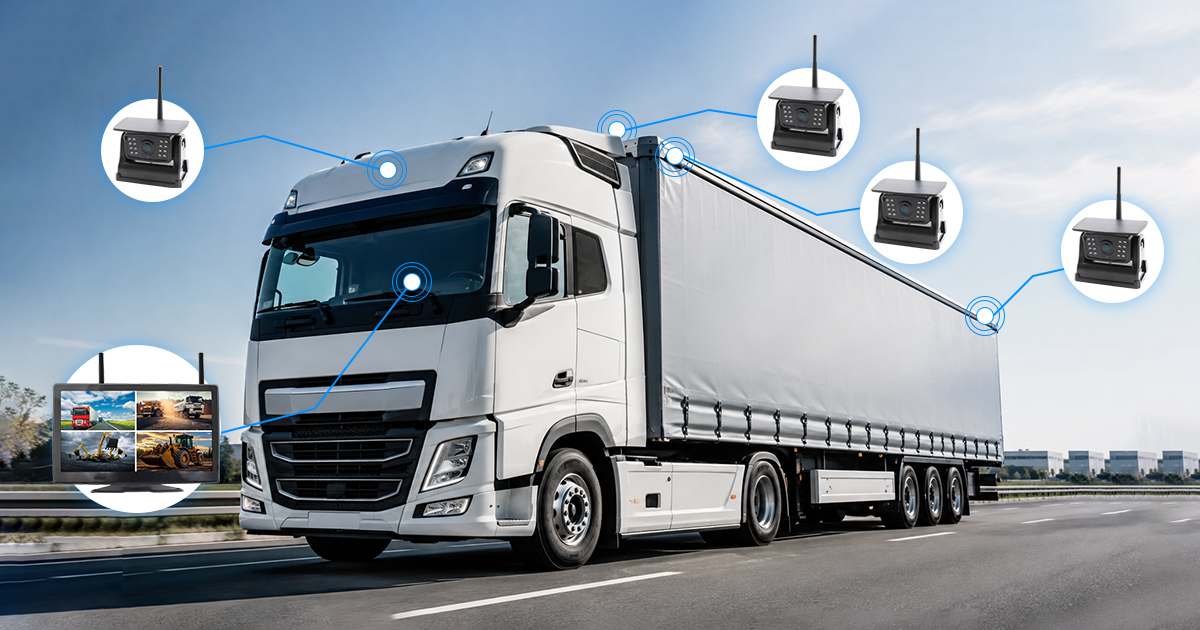
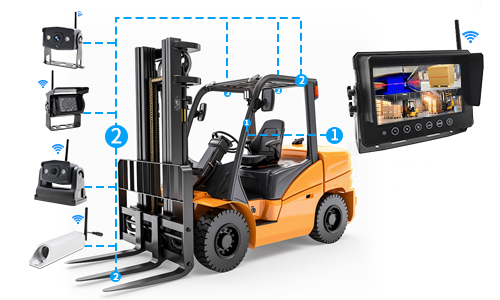
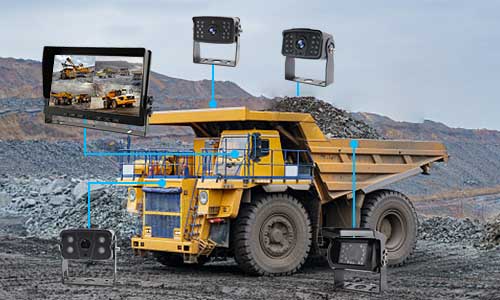
A typical sample set may include a wireless monitor, one or more wireless cameras, magnetic camera bases, battery-powered or solar-assisted camera units, charging accessories, and basic mounting parts. Depending on the model, the monitor may support channel switching, single-camera display, or multiple camera views.
| Component | What to confirm during sample testing |
|---|---|
| Wireless monitor | Screen size, touch operation, channel switching, and image visibility inside the cab |
| Wireless camera | Viewing angle, image clarity, night view, waterproof structure, and mounting direction |
| Magnetic base | Holding strength on the selected vehicle surface under normal movement and vibration |
| Battery or solar-assisted power | Working time, charging routine, and whether the jobsite allows enough charging time |
| Installation accessories | Bracket, charger, power parts, and any parts needed for temporary positioning |
The main value of this system is flexibility. It helps a project team or distributor test camera positions before deciding whether a fixed wired system is needed for regular vehicle operation.
When Is It Suitable for Temporary Project Vehicles?
A wireless magnetic setup is more suitable when the vehicle is still in a testing, rental, or temporary-use stage. It is not always the final choice for long-term fleet installation, but it can be useful before the final camera layout is confirmed.
Common application scenarios include:
- Temporary project vehicles that need short-term rear or side visibility
- Rental vehicles where drilling or permanent wiring is not allowed
- Demonstration vehicles used by distributors or equipment suppliers
- Mobile equipment where the camera position needs to be tested before final installation
- Project fleets comparing rear, side, or blind spot camera positions
- Sample-stage orders before repeat purchasing
The mounting surface matters. A magnetic camera usually performs better on a flat, clean, suitable metal surface. If the mounting area is curved, dusty, oily, plastic-covered, heavily painted, or exposed to strong vibration, the test result may be different.
For this reason, the sample should be tested on the actual vehicle whenever possible. A simple warehouse test on a flat steel plate does not fully represent real vehicle operation.
What Should Be Tested Before Ordering Samples?
Before arranging a sample, the project team should define what the test needs to prove. For some vehicles, the goal is rear visibility. For others, the test may focus on side blind spots, loading area observation, or temporary camera positioning during a project.
The sample test should confirm the following points:
| Test point | Why it matters |
|---|---|
| Camera position | The camera must cover the real blind spot, not only show a clear image |
| Magnetic holding strength | The camera should stay stable during normal vehicle movement and vibration |
| Wireless signal | The image should remain stable at the real distance between the camera and monitor |
| Battery working time | The camera should match the expected daily working hours or shift pattern |
| Monitor operation | The screen, touch control, and channel switching should be practical for the driver |
| Multiple camera use | If three or four cameras are tested, the monitor display mode must be confirmed |
| Outdoor use | Rain, dust, heat, night operation, and site conditions may affect real performance |
If the sample includes multiple wireless cameras, confirm how the monitor handles camera views before ordering. Some monitors display one channel at a time, some support channel switching, and some may support split-screen display depending on the selected model. This should be checked during sample selection, especially when the test involves three or four cameras on one vehicle.
A good sample test should answer a practical question: is this no-drill wireless magnetic setup suitable for the vehicle, or should the final configuration move toward a wired camera monitor system?
How to Check Magnetic Strength, Wireless Distance and Battery Life
Magnetic strength, wireless distance, and battery life are often the most important test points. These values can change under real vehicle conditions, so they should not be judged only by product photos or general specifications.
Magnetic strength
Magnetic performance depends on the vehicle surface and the working environment. A flat and clean metal surface usually gives better holding than a curved, dusty, oily, or coated surface. Project vehicles may also create vibration that changes the camera angle during operation.
During sample testing, place the camera on the intended mounting area and check whether it remains stable during normal movement, turning, stopping, and site operation. If the camera angle moves easily, the position may not be suitable for daily use.
Wireless distance
Wireless signal performance depends on the actual distance between the camera and monitor, but distance is not the only factor. Metal structure, cab location, camera position, nearby wireless devices, and vehicle body blockage can all affect the image.
The test should use the real camera location. If the camera will be placed at the rear of a long vehicle, test it from that position instead of testing only a short distance indoors.
Battery life
Battery working time depends on camera power consumption, usage hours, charging habits, temperature, and whether solar-assisted charging is effective at the site. Solar assistance can help in some outdoor conditions, but it should not be treated as unlimited power.
Before repeat ordering, confirm how many hours the vehicle works each day, where the vehicle is parked, how charging will be arranged, and whether the camera will be used indoors, outdoors, or in shaded areas.
What Support Should Be Confirmed During Sample Testing?
Sample testing is not only about receiving the product. The purchasing team needs enough configuration information to judge whether the same setup can be repeated for more vehicles.
Before arranging the sample, confirm the following details:
- Vehicle type and actual application scenario
- Photos of the intended camera mounting area
- Camera position: rear, side, front, blind spot, or temporary viewing point
- Required number of cameras on one vehicle
- Expected monitor size and operation preference
- Daily working hours and charging routine
- Outdoor conditions such as rain, dust, heat, or night operation
- Whether the sample is for temporary use, resale testing, or future fleet configuration
- Whether product documents or model-specific certificates are required
This information helps avoid a common sample problem: the product works, but it does not match the real vehicle condition or future purchasing plan.
For example, if the test is only for temporary rear viewing on one rental vehicle, a wireless magnetic system may be enough. If the same customer later needs a stable system for many vehicles, a wired camera monitor system may become the better final direction.
When Is a Wired Camera Monitor System a Better Choice?
A wireless magnetic system is useful when flexibility is the priority. A wired camera monitor system is usually better when long-term stability is more important than quick installation.
Consider a wired system when the project requires:
- Permanent installation on project vehicles
- Daily long-hour operation
- Strong vibration resistance
- Stable signal under harsh working conditions
- Multiple cameras installed permanently
- Standardized installation across several vehicles
- Lower dependence on battery charging
- Future connection with MDVR recording or playback requirements
A practical approach is to use the wireless magnetic sample for early testing. Once the camera position, blind spot requirement, and vehicle type are clear, the final project configuration can be reviewed again. In some cases, the wireless magnetic system remains suitable. In other cases, a fixed wired camera monitor system may reduce later maintenance and charging concerns.
Wireless Magnetic Camera Monitor System FAQ
Is a wireless magnetic camera strong enough for project vehicles?
It depends on the vehicle surface, magnet design, mounting position, vibration, and working environment. The camera should be tested on the actual mounting area before repeat ordering. A simple indoor test is not enough to confirm real vehicle use.
What affects wireless camera distance on a vehicle?
Wireless distance can be affected by vehicle length, metal body structure, monitor location, camera position, signal blockage, nearby wireless devices, and site interference. The test should use the real camera-to-monitor distance on the vehicle.
How long can a battery-powered vehicle camera work?
Battery working time depends on battery capacity, camera power consumption, daily working hours, temperature, charging method, and solar charging conditions. The sample should be tested according to the actual shift schedule.
Can one monitor work with several wireless cameras?
It depends on the selected monitor and camera model. Before ordering samples, confirm whether the monitor supports the required camera quantity, whether it displays one channel at a time, and whether channel switching or split-screen viewing is available.
When should a project choose a wired system instead?
A wired system is usually better for permanent installation, daily fleet operation, strong vibration environments, multiple fixed cameras, and future recording needs. Wireless magnetic systems are more suitable for temporary installation, sample testing, and no-drill evaluation.
Conclusion: Use the Sample Test to Confirm Real Vehicle Fit
A wireless magnetic camera monitor system can be a useful starting point for temporary project vehicles, rental vehicles, demonstration units, and sample-stage purchasing. It allows the project team to test camera visibility without immediate drilling or cable routing.
The test should focus on real vehicle fit. Magnetic holding strength, wireless signal stability, battery working time, monitor operation, camera position, and outdoor conditions should all be checked before repeat orders.
Before arranging a sample, prepare vehicle photos, intended mounting positions, required camera quantity, daily working hours, outdoor use conditions, and future purchasing expectations. These details make it easier to decide whether a wireless magnetic system is suitable for the test stage or whether a wired camera monitor system should be considered for the final vehicle configuration.